Tracing the Origin
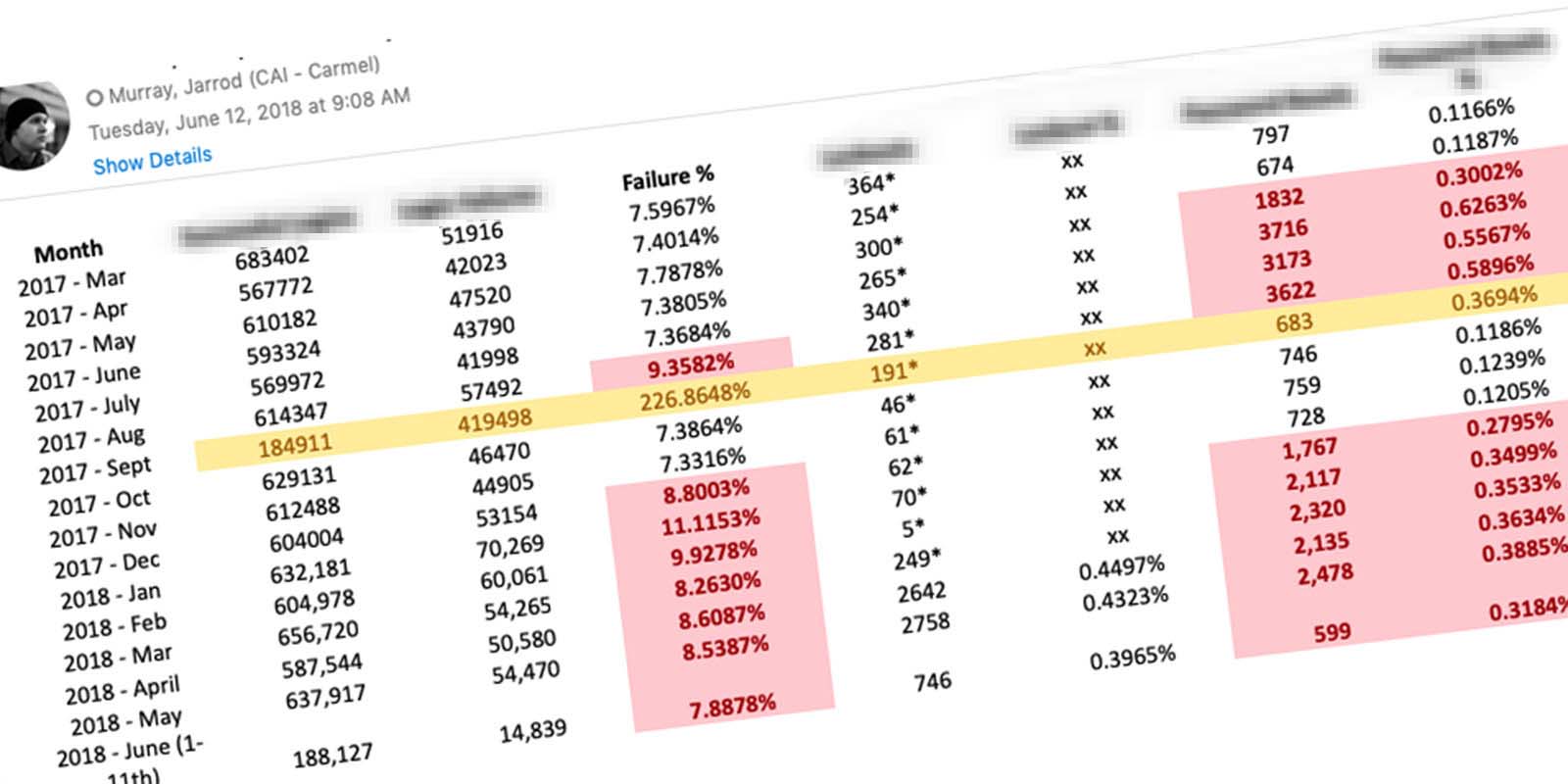
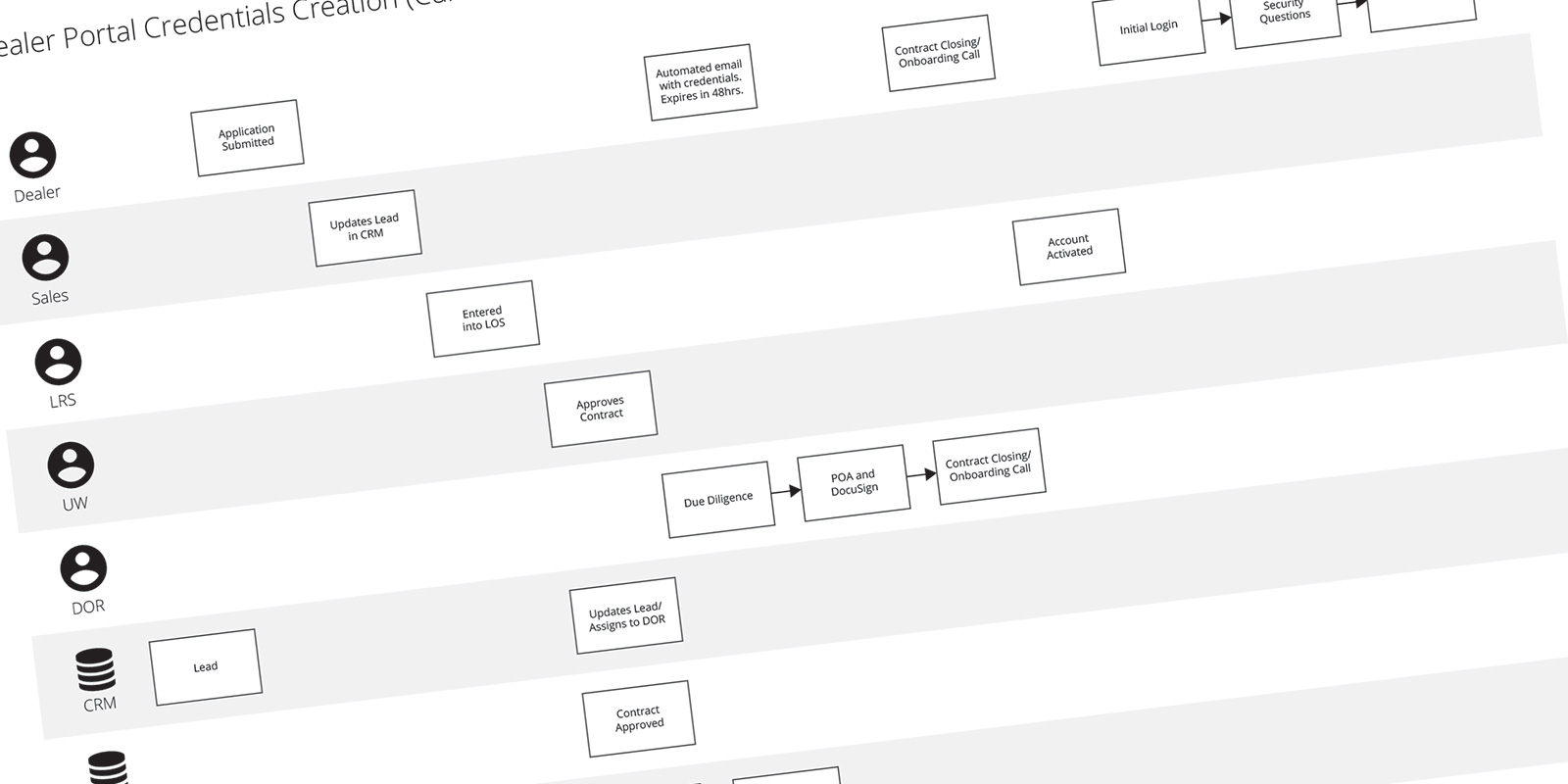
A January 2017 study found that 39% of Americans have a hard time keeping track of their online passwords. That statistic wasn’t surprising, but what I found next was. I mapped the full credential pipeline from application submission to initial login and discovered it takes five departments and three applications to turn an applicant into a user.
Where It Breaks Down
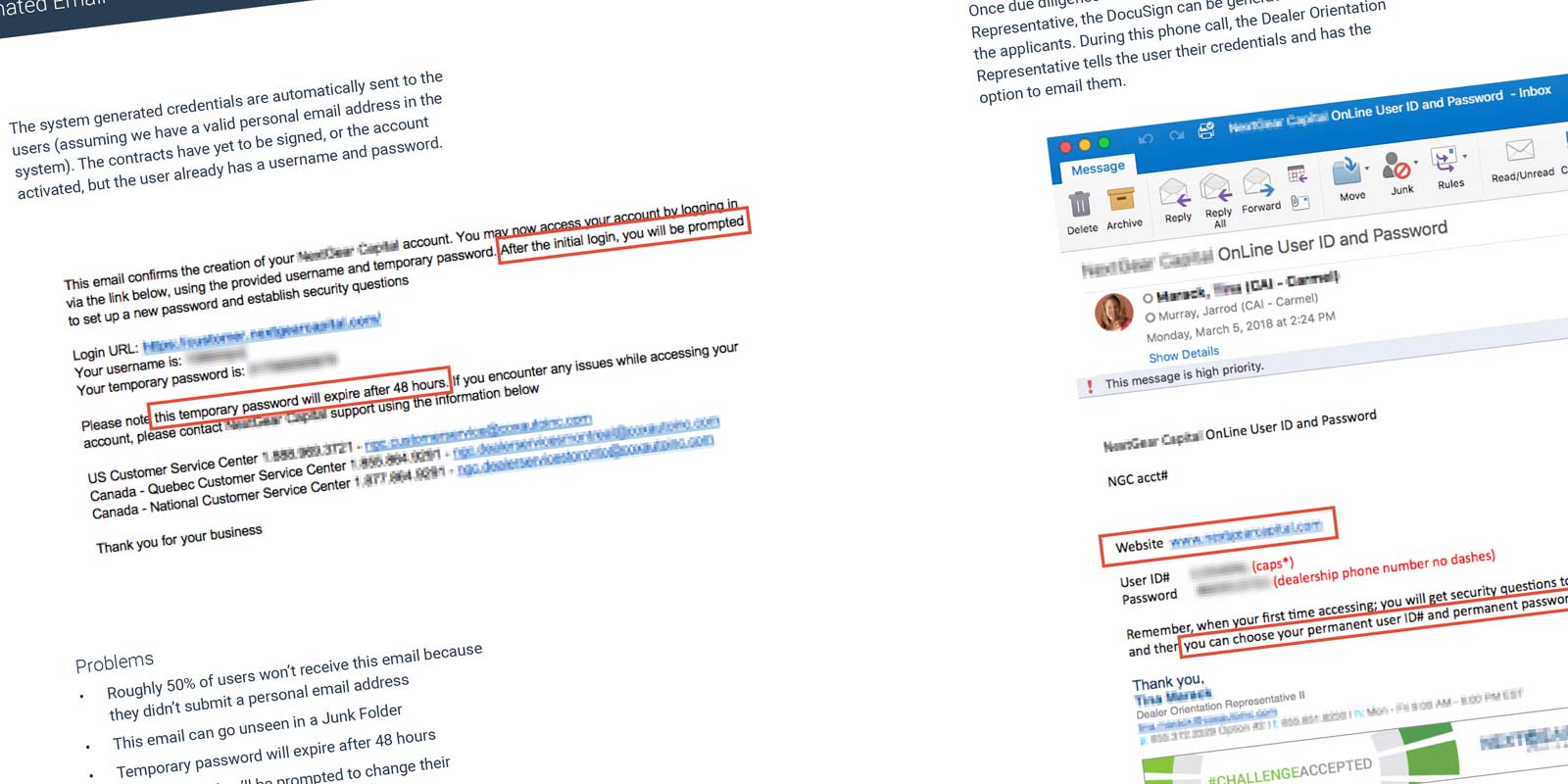
The research surfaced failure points at every stage. Roughly 50% of credit applications were submitted without a personal email address because the field wasn’t required and its purpose wasn’t explained. Without it, the system had nowhere to send credentials. For users who did provide one, the automated email could land in junk, the temporary password expired after 48 hours, and the email told users they’d be prompted to change their password on first login, which wasn’t true.
During onboarding, Dealer Orientation Representatives were reading credentials over the phone and directing users to the marketing site instead of the portal. On first login, users were asked to set security questions but never prompted to choose a permanent username or password. The system-generated password was the business phone number from the contract, assuming users would know both which number was used and that it was their password.
The Validation and Error Problem
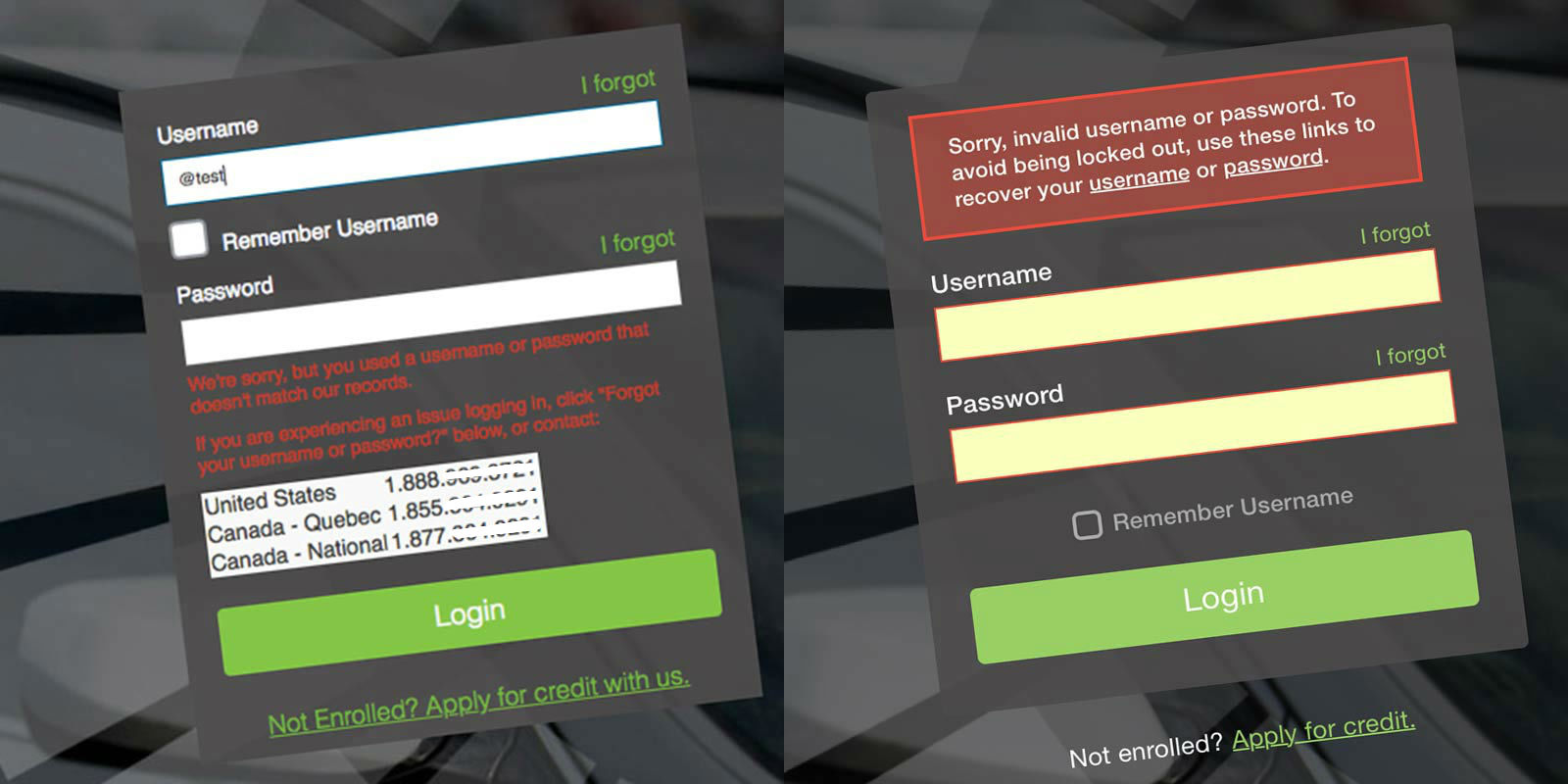
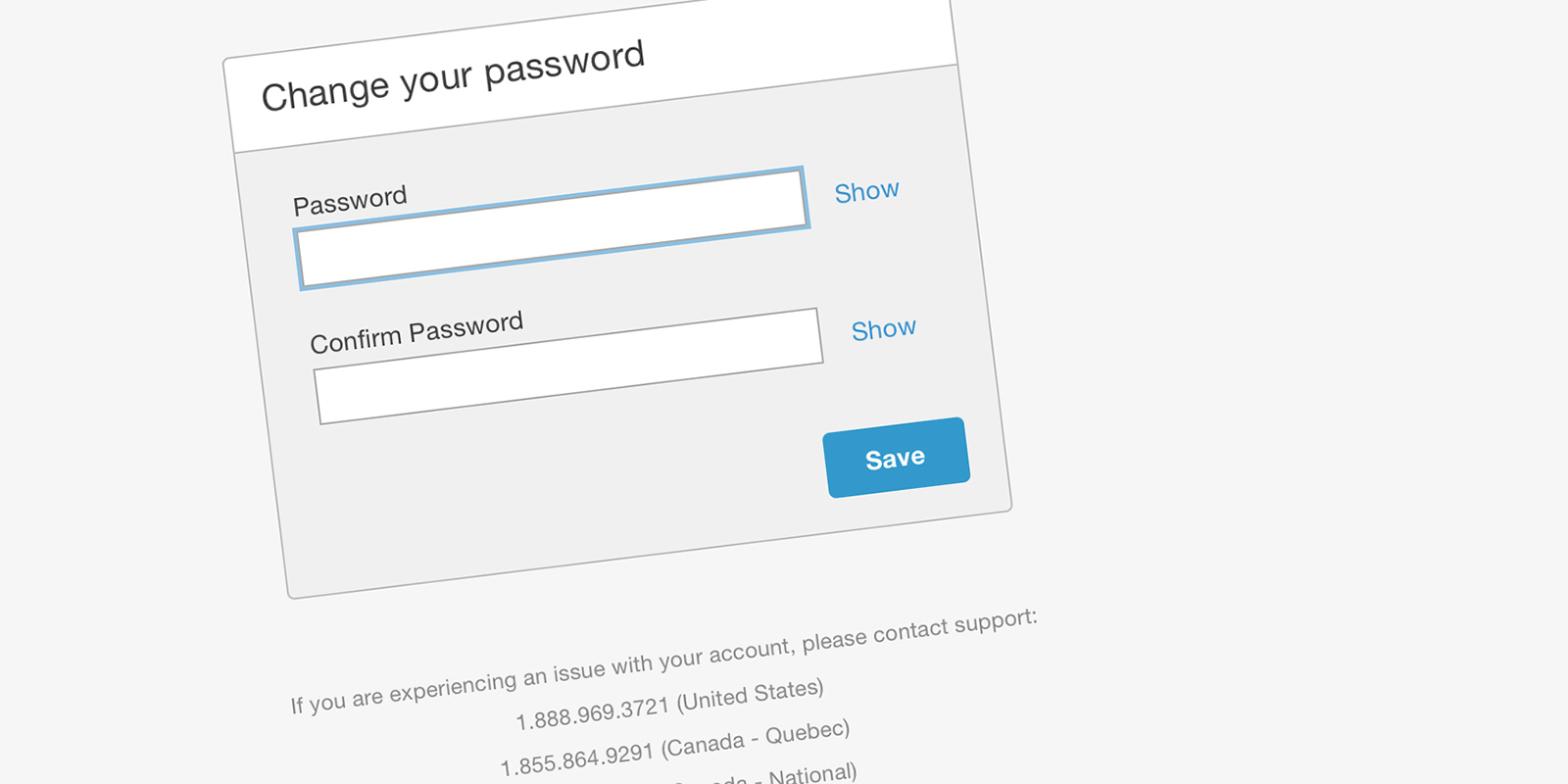
Even users who cleared all of that hit a broken update experience. The profile edit screen displayed the system-generated password as empty. The form looked like a prompt to enter a new password rather than change one. Validation rules were hidden behind a hover, useless on mobile. Users had to submit to discover errors. And the login screen’s error message referenced a “Forgot your username or password?” link that didn’t exist, while making the phone numbers look like the preferred resolution path.
The Problem Statement
After mapping every failure point, I compiled the findings into an 11-page problem statement covering the issues, the goal, and the cost of ignoring them. One stakeholder told me it was the best document he had ever seen.
The Strategy Document
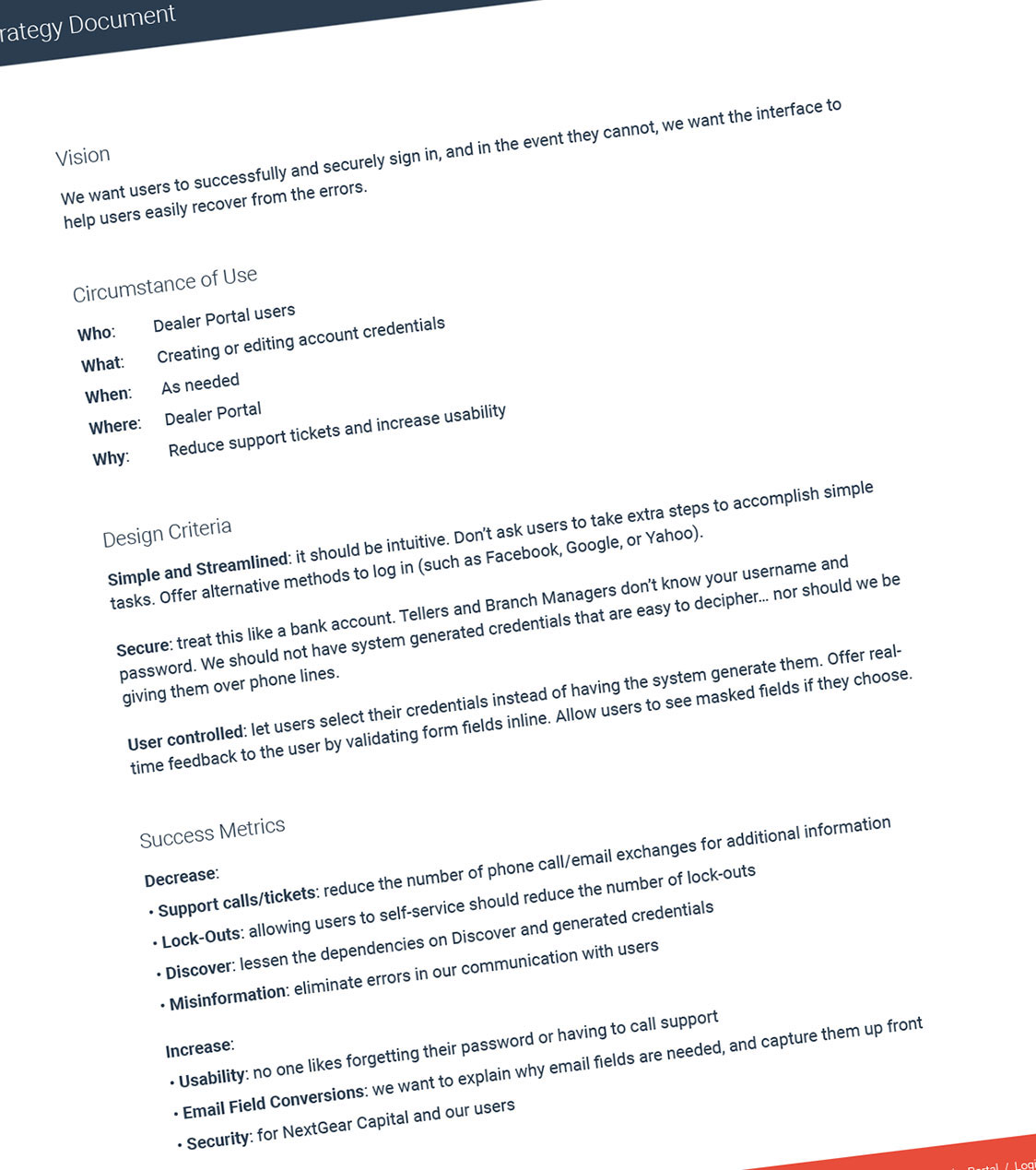
The problem statement led directly into a strategy document outlining the phased approach and the upstream backend fixes required before self-service could work: making the personal email field required, prompting permanent credentials on first login, fixing error messaging, and expanding password reset access beyond supervisors.